
What Another Winter of Putting This Off Actually Costs
If your garage sits uninsulated through another Michigan winter, here's what that looks like by February: a door so cold to the touch it sweats when the furnace kicks on next door, a frozen puddle under the car by morning, and if you've got a bedroom or laundry room above or behind the garage, a noticeably colder floor and a furnace that runs longer to compensate. None of that shows up as one big bill. It shows up as a slightly higher heating bill every month and a garage that never quite feels usable between November and April. That's the real cost of ignoring this argument one more season — not a catastrophe, just slow, steady waste.
What R-Value Actually Means, No Jargon
R-value measures how well a material resists heat transfer. Higher number, better insulator. A garage door's R-value depends on three things: whether it has one layer of steel or two (with insulation sandwiched between), the type of insulation (polystyrene versus polyurethane foam), and how well it seals against the frame when closed. A door can have a great R-value on paper and still leak cold air around the edges if the weatherstripping is shot — so the number alone doesn't tell the whole story.
Typical ranges you'll see on manufacturer labels: single-layer steel doors with no insulation are essentially R-0 to R-2. Polystyrene-insulated doors usually land around R-6 to R-9. Doors with injected polyurethane foam and two steel layers often hit R-12 to R-18 or higher. Those are national manufacturer ranges, not quotes — actual performance depends on door size, glass sections, and installation quality.
Who Actually Benefits
- Attached garages — especially with a shared wall to living space, a bedroom above, or ductwork running through it. An insulated door reduces how much cold (or summer humidity and heat) transfers into the house.
- Garages used as workshops, gyms, or hangout space — if you're in there for more than parking the car, insulation makes a real comfort difference through deep-cold months and humid storm season alike.
- Homes with a heated garage — if you're already paying to heat the space, an uninsulated door is throwing a good chunk of that heat straight outside.
Who's Paying for Nothing
- Detached garages with no heating and no shared wall to the house. Insulation here is mostly about reducing condensation and temperature swings on stored items, not comfort or energy savings.
- Garages that are rarely entered in winter — if it's strictly a place the car sits and you're in and out in under a minute, the payback on a premium insulated door is slow.
- Anyone whose real problem is the weatherstripping, not the door panel. A high R-value door with worn-out bottom seal and side seals still lets cold air and road salt spray in around the edges. Fix the seals first; sometimes that solves most of the complaint on its own.
The Weight and Hardware Trade-off
Insulated doors with double steel layers are heavier than single-layer doors. That matters because springs and openers are sized to the door's weight. If you're upgrading from an uninsulated door to a heavy insulated one, the existing springs and opener may need to be resized or replaced to handle the new load safely — otherwise you're looking at premature spring failure or an opener straining every time it lifts.
Settling the Argument
If the garage is attached, used often, or sits under or beside living space, the spouse arguing for insulation is right, and it's a reasonable investment tied to real comfort and energy use through the winter and the humid storm months. If it's a detached, unheated garage used only for parking, the other spouse has a point — the money is better spent on good weatherstripping and maybe better seals than on a high R-value door nobody will feel the benefit of.
When to Call Saginaw Garage Door
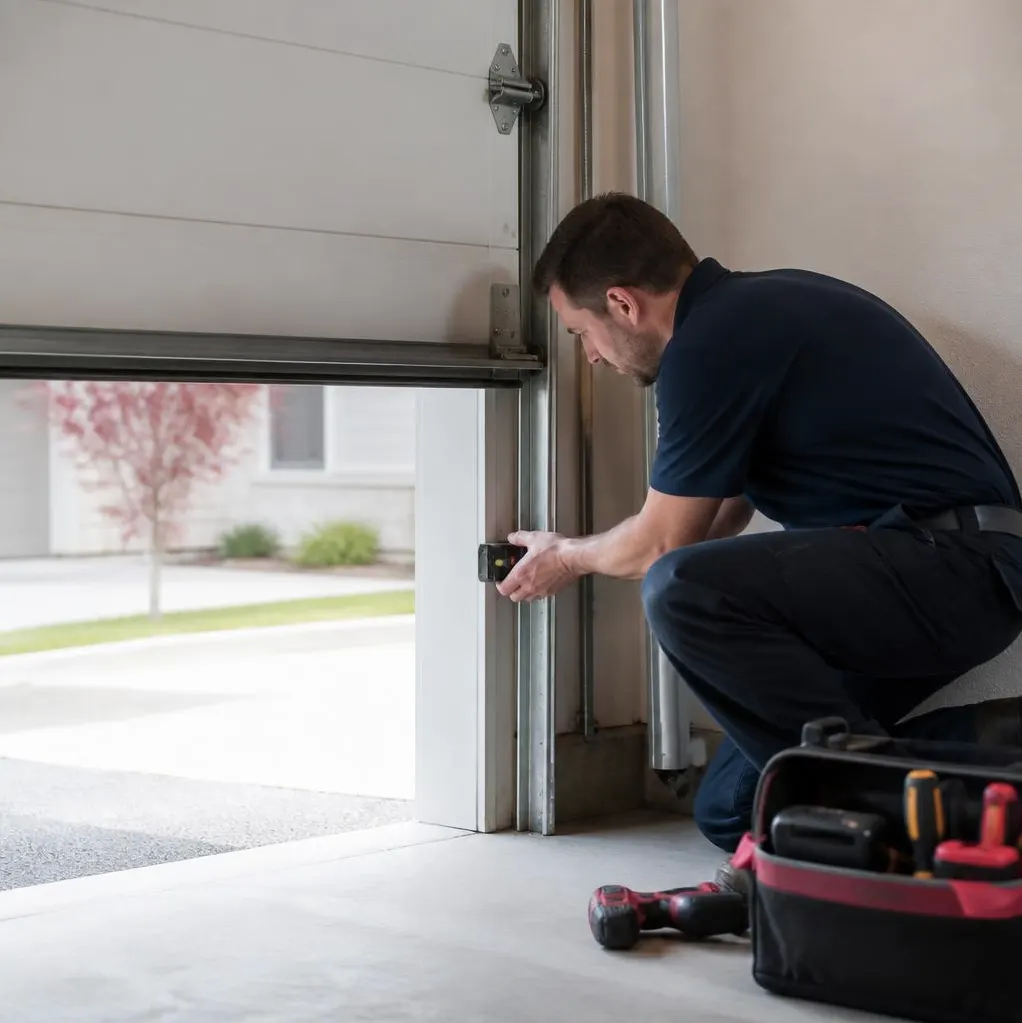
If you're ready to settle this for good, we'll come look at the actual door, the garage's layout, and the condition of your seals before recommending anything. Sometimes the fix is a Garage Door Maintenance visit to replace worn weatherstripping and re-adjust the seal — a fraction of the cost of a new door. Other times, especially with an older single-layer door heading into another hard winter, a proper Garage Door Installation with a correctly matched insulated panel, plus springs and opener sized for the new weight, is the right call. Either way, we'll tell you honestly which side of the argument your garage actually falls on.
If you're in Saginaw, Bay City, Midland, Frankenmuth, Bridgeport, Birch Run, Freeland, or Hemlock and ready to get a straight answer before winter sets in, call Saginaw Garage Door today.